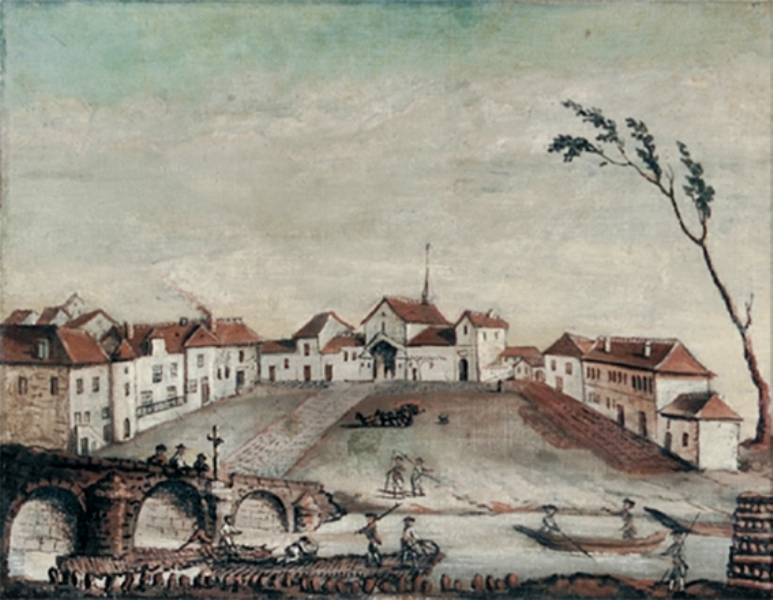
In the Burgundian town of Clamecy, partially hidden behind the facades of more modern buildings, lies the intact structure of the medieval “cathedral” of Saint Mary, seat of the exiled Crusader bishops of Bethlehem in the Holy Land and the last vestige of a unique and prestigious chapter in local history.
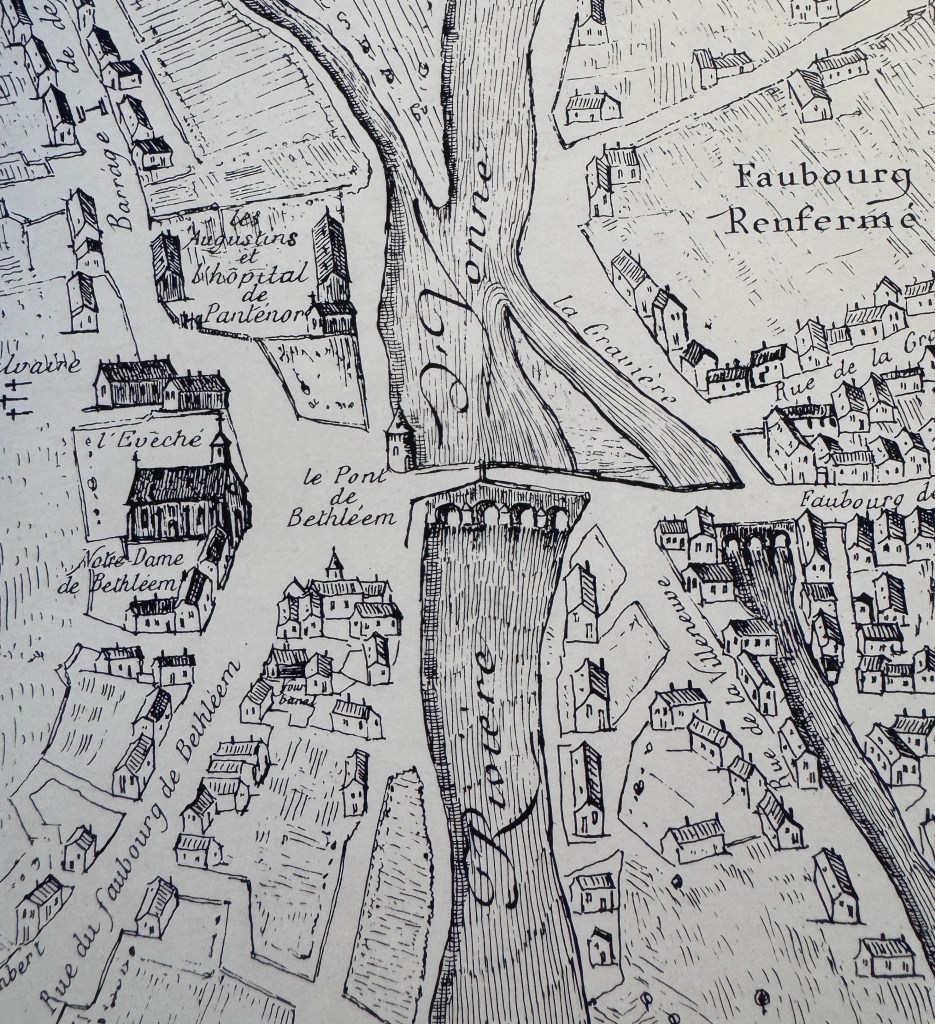
During the medieval Crusades, Roman Catholic « Latin » bishoprics were established in the Holy Land, including in Bethlehem, the birthplace of Christ.
In 1117, Count William II of Nevers founded a hospice (or Maison-Dieu, a clergy-run hospital) and a chapel dedicated to Our Lady in the Clamecy suburb named Panthenor. His grandson and crusader Count William IV, who fell ill and died in the Holy Land in 1168, was buried near the Church of the Nativity in Bethlehem.
In his will, the Count bequeathed the hospice and surrounding properties in Clamecy and the related revenues to the Latin bishopric of Bethlehem, indicating that Clamecy would be a place of refuge if the bishop would ever be exiled from Palestine, thereby connecting the Holy Land with the Burgundian town.
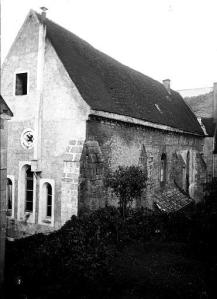
In 1224, following the fall of the crusader Kingdom of Jerusalem to Saladin, the exiled Latin Bishop of Bethlehem took up the offer of residence in Clamecy. The newly-established diocese of Bethléem-lez-Clamecy enjoyed a special (and often disputed) ecclesiastical status subject directly to the Holy See, with the incumbents nominated by the Pope.
The “diocese” covered a small area of Clamecy which to this day is still known as Bethlehem, or “Judée” in popular idiom (as recorded in Colas Breugnon). Over the centuries, only few of the 50 bishops actually resided in their tiny Burgundian bishopric, taking up clerical offices elsewhere, as Auxiliary bishop or vicar general in larger French dioceses.
In 1790, the diocese was abolished as a residential see during the French Revolution (later affirmed by the Napoleonic Concordat of 1801), its territory being merged on 29 November into the Diocese of Autun. Subsequently, in 1840, the honorific title of Bishop of Bethlehem was attributed to the ancient Abbey of Saint Agaune in Switzerland, although the history is is still recalled in the name of the current Roman Catholic parish of Saint Mary of Bethlehem, covering Clamecy and the region.
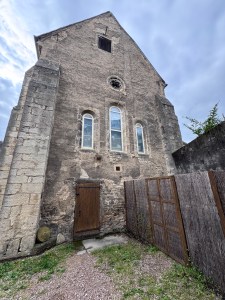
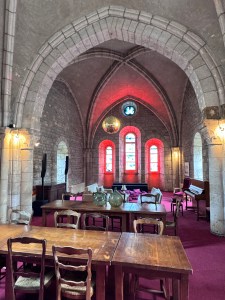
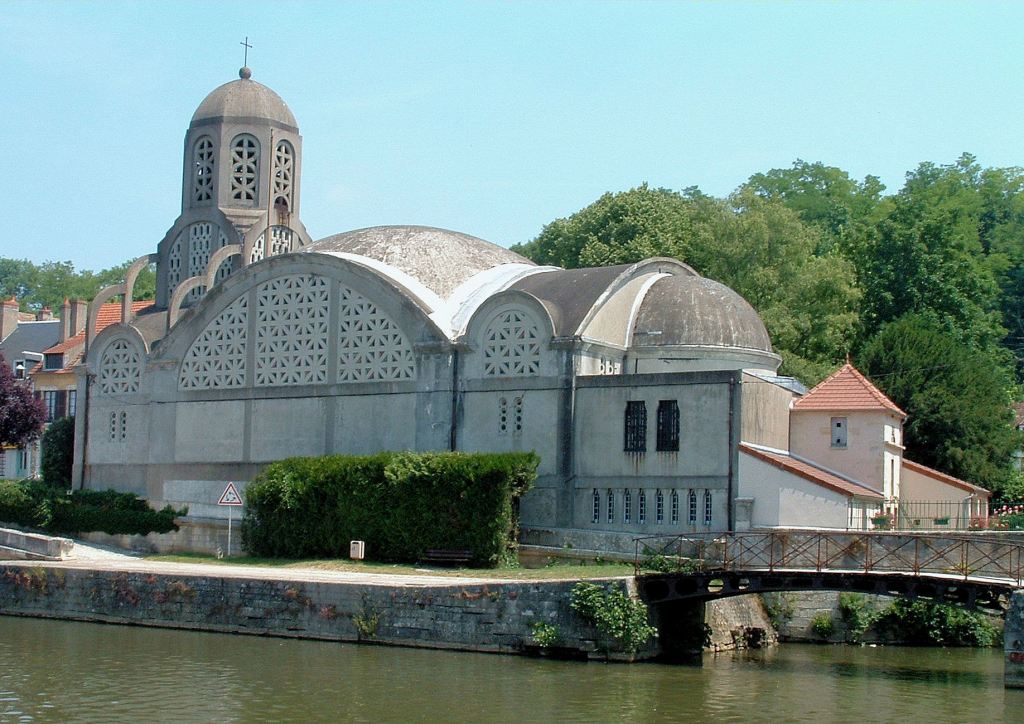
And what remains of the building? The former medieval church was partially destroyed and repurposed after the Revolution in 1790, as a private dwelling and in the 20th century the facade was demolished and the building converted into a hotel and restaurant. Today, the only the upper part of the church building is accessible and serves as a dining room and for private events. A larger, neo-byzantine church of Our Lady of Bethlehem was built in 1926 nearby the defunct chapel, replacing a 19th century parish church. This is the last vestige of the remarkable but largely forgotten history of a small piece of the Holy Land that was exiled to Burgundy.

 Le Vieux Château